
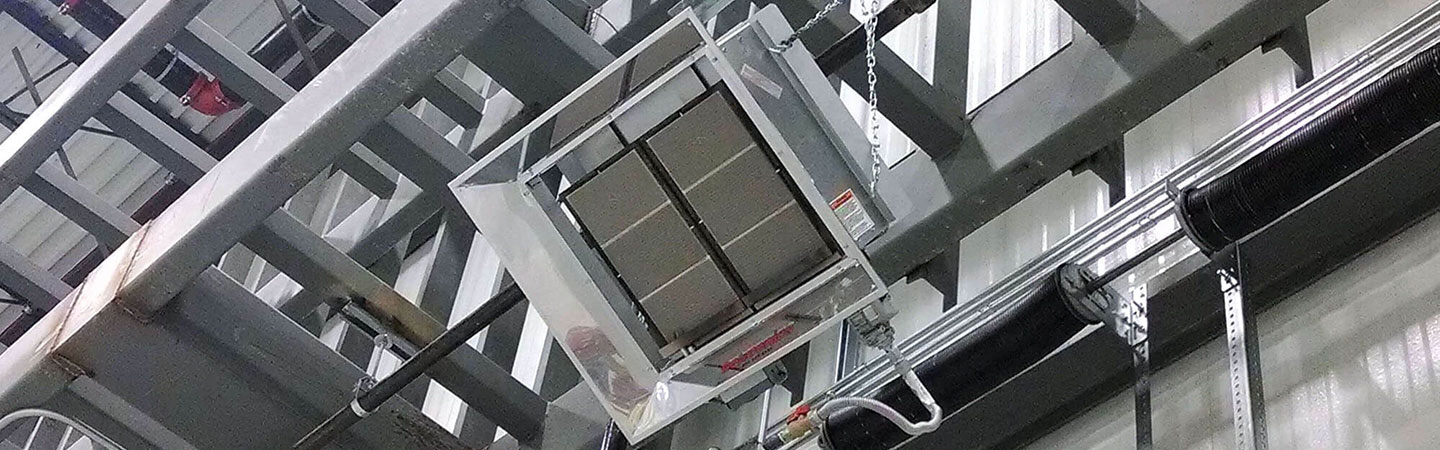

Advanced Infrared Heating Technology
Solaronics high and low intensity infrared tube heaters and ceramic heaters convert a high rate of their input to infrared output. Input energy not converted into infrared is released as convected heat. Depending on the application requirements, our gas infrared heaters can be installed using direct or indirect venting. Unlike unit heaters, that allow heat to rapidly rise to the ceiling, Solaronics tube heaters direct their infrared heat towards the floor, where heat is invariably desired.
The difference between high intensity tube heaters and low intensity tube heaters is based on the operation. For example, a high intensity tube heater’s energy is emitted at a higher amplitude and temperature than a low intensity tube heater. High intensity tube heaters are also ventless. Low intensity tube heaters operate at a lower temperature and may be installed with or without vent depending on the application. Both high and low intensity tube heaters work well in commercial and industrial applications. Low-intensity tube heaters may be used in residential garages. Contact us to learn more about which gas infrared heater is better suited for your application.
Solaronics' gas infrared heater lineup offers more than six decades of engineering experience and customer feedback to deliver the most efficient high and low intensity tube heaters in the industry. With the customer service provided by our staff, while working side-by-side with our dedicated distribution network throughout the country, Solaronics offers a truly unique opportunity that sets us apart from our competition. Our design-build services offered for your application are also simply unmatched.
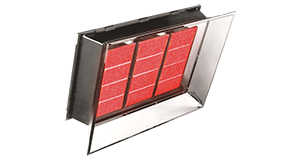
High Intensity Infrared Ceramic Heaters
For performance, reliability, and value, Solaronics high-intensity ceramic heaters provide energy-efficient heating solutions.
Learn More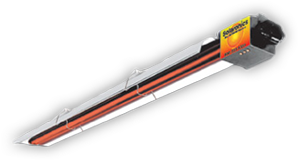
Low Intensity Infrared Tube Heaters
Solaronics Suntube low-intensity heaters are powered by a positive pressure burner which fires by 5′ or 10′ long steel tubes.
Learn More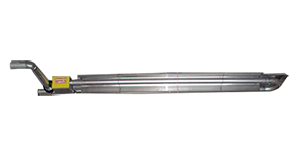
Residential Infrared Tube Heater
Solaronics low intensity heater certified for use in residential garage applications.
Learn More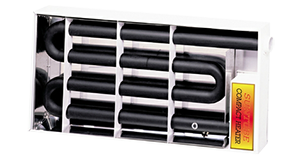
Compact Infrared Tube Heater (Discontinued)
Low intensity tube heater utilizing positive-pressure operation for any weather condition.
Learn More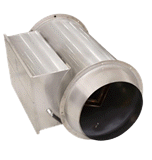
Overhead DoorJet Door Heater
Fully stainless steel construction offering a watertight control cabinet for long-lasting and reliable operation.
Learn MoreChoosing Between High and Low Intensity
Both heater families share the same operating principle, but they behave differently once installed. The right pick comes down to operating temperature, venting requirements, and how quickly you need a space to warm up
High Intensity Tube Heaters
A high intensity tube heater emits energy at a higher amplitude and surface temperature, runs ventless, and warms surfaces almost immediately after ignition. This makes them well suited for spot heating, loading docks, outdoor patios, and large open spaces where doors cycle often and rapid recovery matters.
Low Intensity Tube Heaters
A low intensity tube heater operates at a lower surface temperature and can be installed vented or unvented depending on the building. The longer, gentler heatpattern suits continuous heating across commercial and industrial floor space. Select low intensity models are also certified for residential garage use.
Six Decades of Engineering, Backed by a National Rep Network
Solaronics gas infrared heaters carry more than sixty years of engineering refinement and customer feedback. Our staff works alongside a dedicated distribution network across North America, so the rep helping you size a unit knows local code, fuel availability, and the typical building stock in your region.
Design-build support is available for nonstandard applications, retrofits, and harsh environments. Solaronics is an ISO 9001:2015 certified manufacturer.
Find the Right Heater for Your Space
Connect with a Solaronics representative in your area to walk through sizing, layout, and venting options. Our reps work with engineers, contractors, building owners, and homeowners every day, so you get answers grounded in your local code, fuel availability, and the type of building you are heating. Bring your floor plan, ceiling height, and a rough sense of how the space is used, and we can point you toward the right product line on the first call. Quotes, spec sheets, and design-build support are available at no cost.
Find A Rep or call 800.223.5335 to speak with our team in Auburn Hills, Michigan.
Frequently Asked Questions About Gas Infrared Heaters
Minimum mounting heights vary by model and BTU input, and they apply to the distance between the heater and any combustible materials, stored product, or occupants below. High intensity ceramic heaters typically require greater mounting height than low intensity units because of their higher surface temperatures. Always check the installation manual for your specific model, and confirm the heater is listed for the intended occupancy.
Open-flame infrared equipment is not appropriate for areas classified as hazardous locations under NFPA or local code. Many vehicle service bays, hangars, and woodworking shops have specific zoning requirements around the floor or near paint operations. Solaronics offers stainless steel construction options for harsh environments and can advise on safe placement, but the building owner and authority having jurisdiction make the final call on classified-area installations.
Annual inspection is the baseline. A technician should check the burner, reflector cleanliness, vent integrity (on vented systems), gas pressure, and ignition components once per heating season. Reflector cleanliness has a real effect on output, since a fouled reflector scatters energy rather than directing it downward. Our Resource Library includes troubleshooting guides for both single stage and two stage tube heater systems.